Words
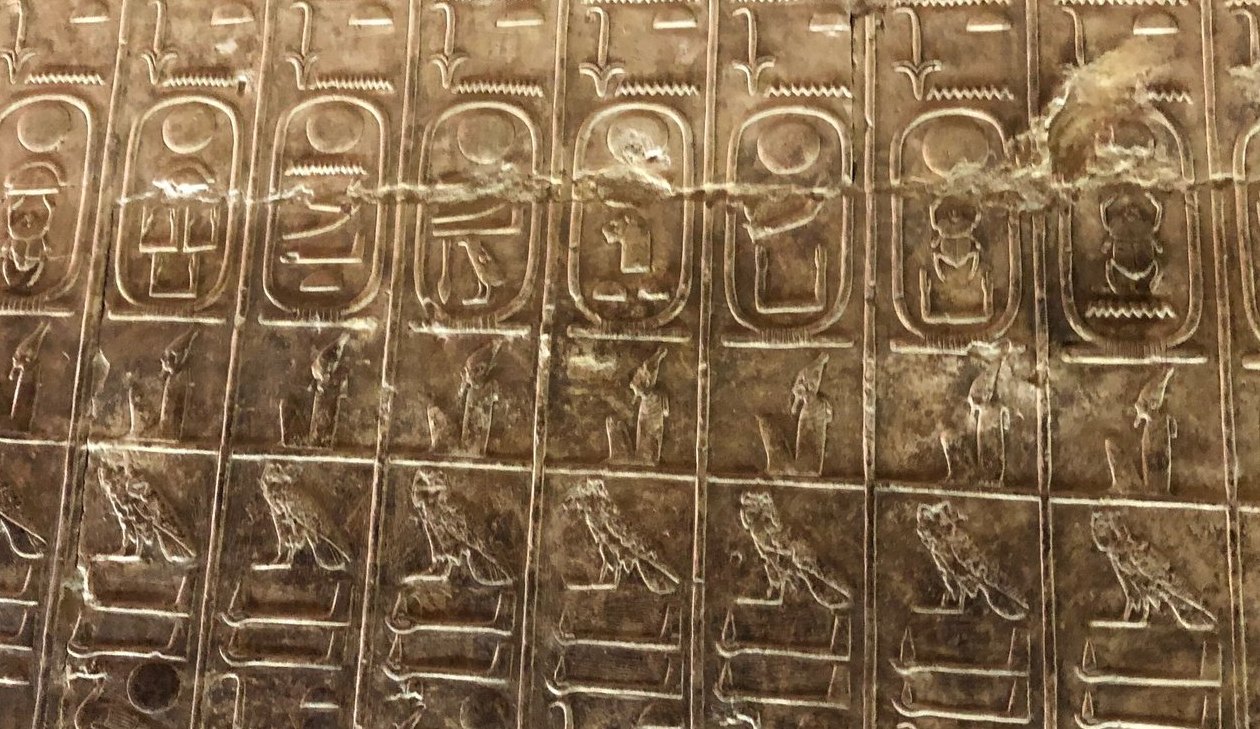
See the oval. A name was written inside it so everyone would know whose name it was.
See the ovals. A name was written inside so people would know whose name it was.
A name inside the oval
What repeats? What changes?
Do all the ovals say the same thing?
What do you think?
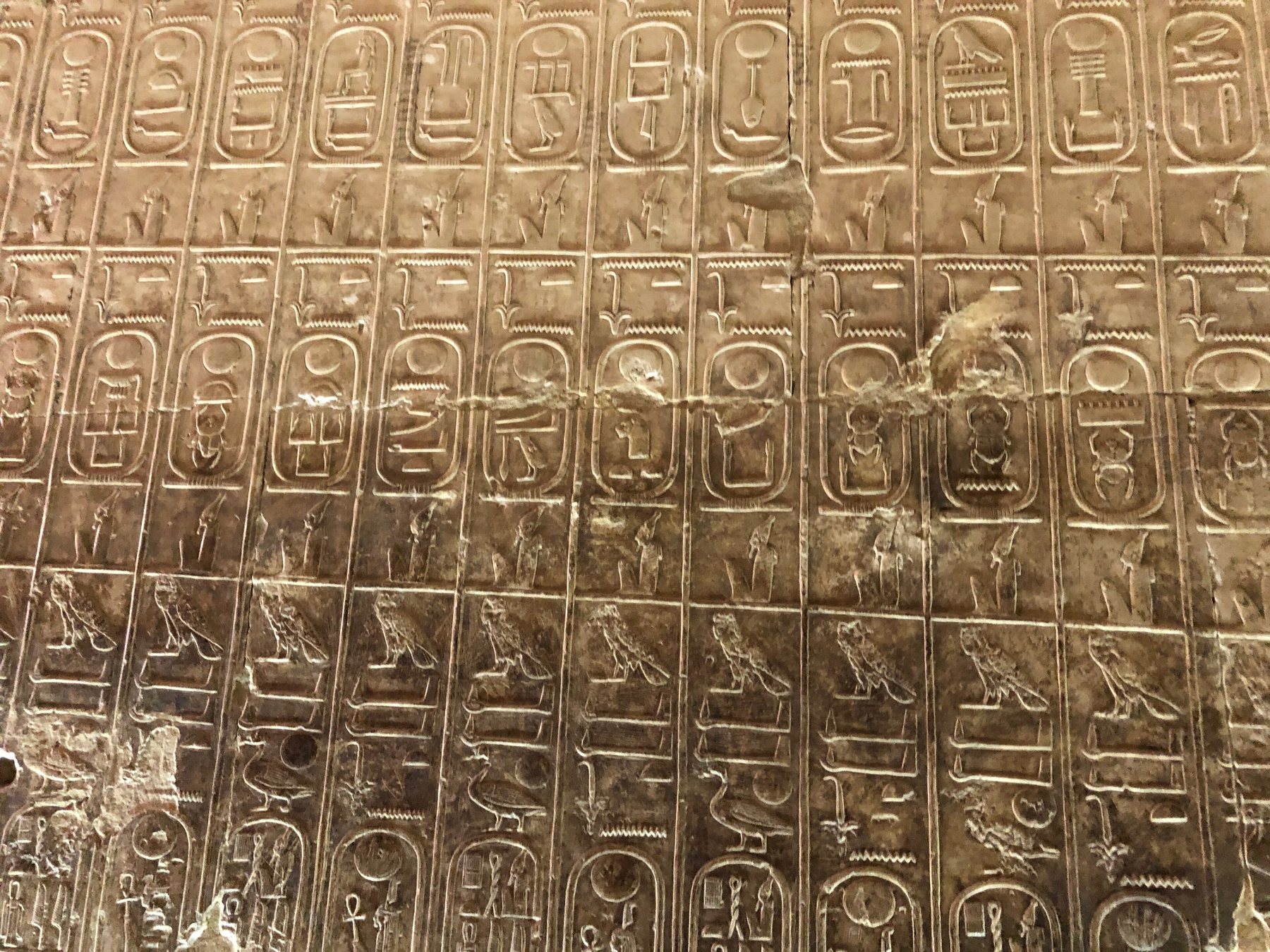
The repeating shape is the oval. Tap one.
Keep looking
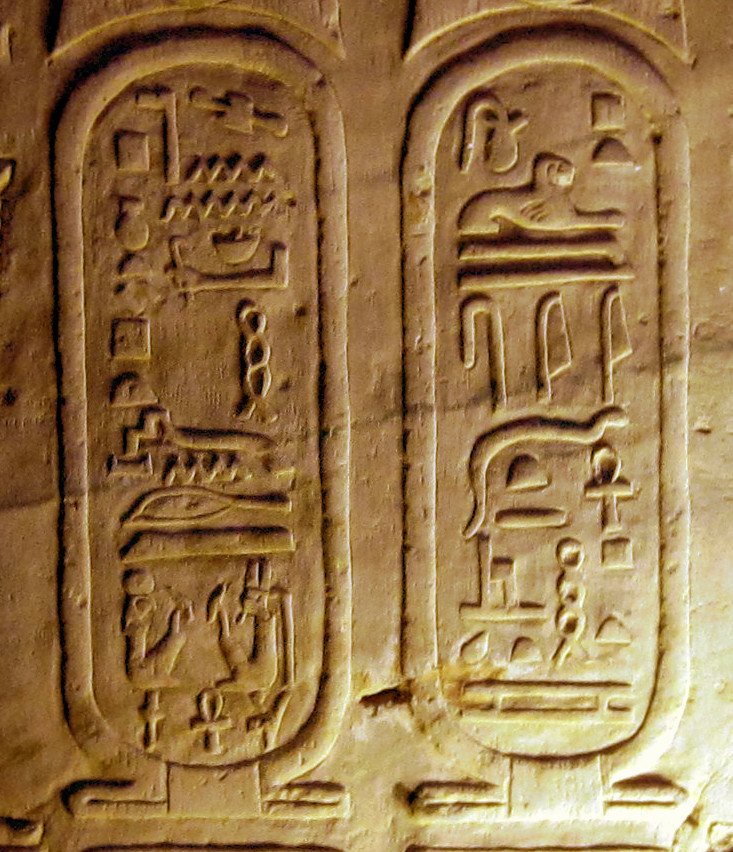
This oval, at Kom Ombo, holds a name of Ptolemy XII. On the Rosetta Stone, ovals of Ptolemy V helped Thomas Young try sounds. A Cleopatra oval on an obelisk from Philae gave Champollion another name to test.
This wall is the king list in the temple of Seti I at Abydos. It is Egyptian. A script is not the same thing as a whole culture.
This is a careful guess. Finding a name is a start. You still have to test each sign in another place.

When you leave
Write your name. Put an oval around it. Ask someone else if they can tell it is a name.
Try with a grown-up. Look at the same thing. Look at the same coin or stamp together. Point to what repeats. Point to what changes.
If someone found your writing 1,000 years from now, how would they know what it meant?