
What we can show
Egyptians built the Giza pyramids. The state organized crews. Copper tools, sledges, ramps, and boats were part of the work. Casing stone came from Tura.
This is written down.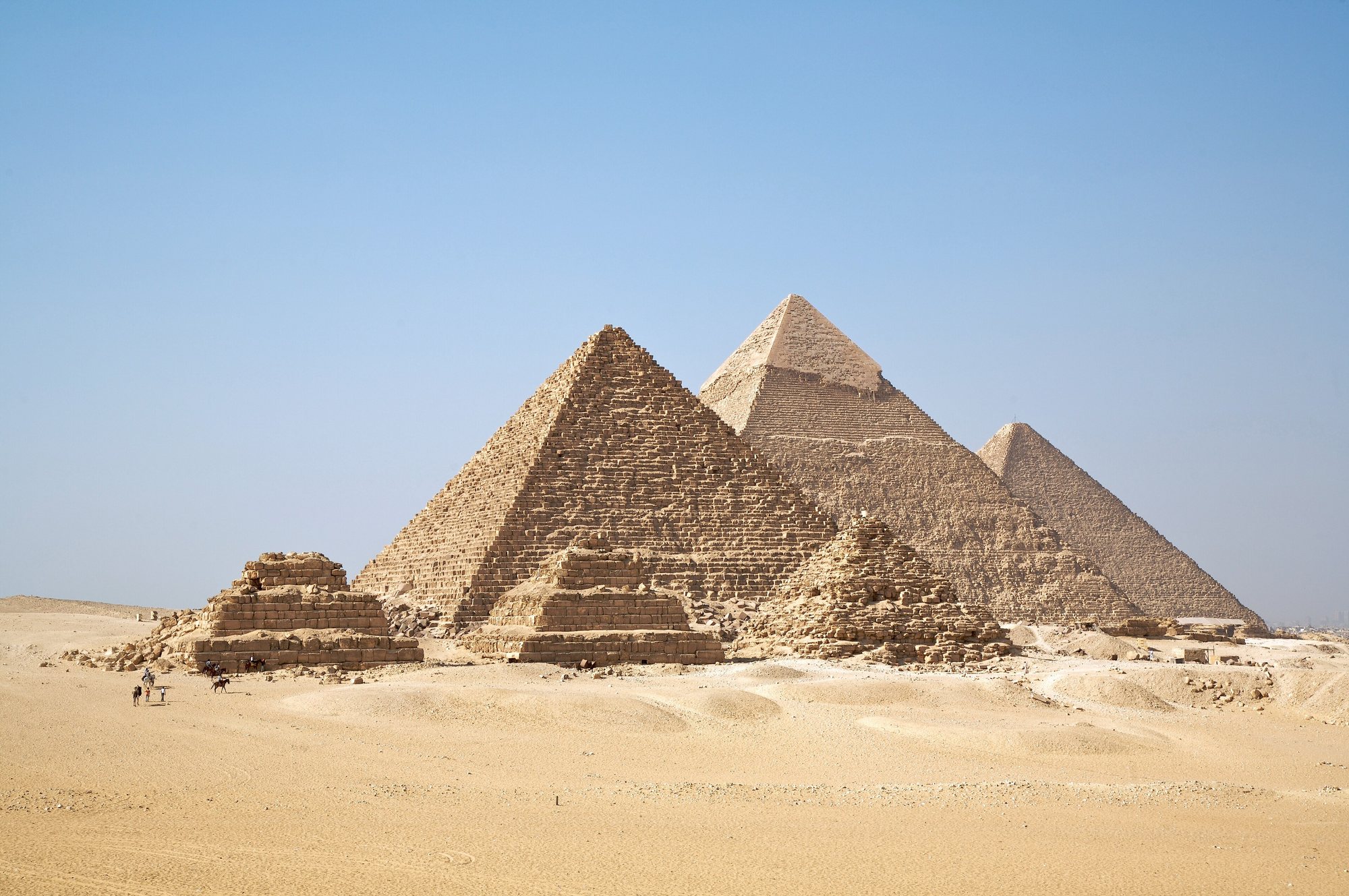
They are still here. Who built them? How could we know?
Look at the stones before anyone explains them.
Who built them? How could we know?
What do you think?
They stand on the Giza plateau. The three large pyramids belong to Khufu, Khafre, and Menkaure, kings of Egypt.
Friends of Khufu
Work gangs painted names like this on the blocks they moved. That is writing by the people who did the work.
This is written down. Found in small rooms inside Khufu's pyramid, above the king's chamber.
Day 26. Inspector Merer sets off with his crew from Tura South, loaded with stone, for Akhet-Khufu.
Akhet-Khufu means the Horizon of Khufu. That is the Great Pyramid's own name. Merer was shipping limestone by boat.
This is written down. Papyrus found in 2013 at Wadi al-Jarf. A translation of a real day in the work.
Archaeologists found a workers' town beside the pyramids: houses, bakeries, and bones of people who ate well enough to do hard work.
We can see this. Houses, bread, and bones can be seen in the ground.
What shows who built them? What is still argued?
A work gang painted Friends of Khufu on a block
Merer's logbook: stone for Akhet-Khufu, the Horizon of Khufu
A workers' town with bakeries and bones beside the pyramids
The exact ramp plan for the highest blocks
Egyptians built the Giza pyramids. The state organized crews. Copper tools, sledges, ramps, and boats were part of the work. Casing stone came from Tura.
This is written down.The exact ramp plan, and how the highest blocks were raised, are still discussed. Uncertainty about the last steps is not uncertainty about who did the work.
People still argue about this.A missing diagram of a ramp is not a missing civilization.
Look at a brick building near you. Who laid the bricks? What would prove it later?
Try with a grown-up. Look at the same thing. Look at the same building together. What can you see on it? What is only a claim?
If someone found your writing 1,000 years from now, how would they know what it meant?