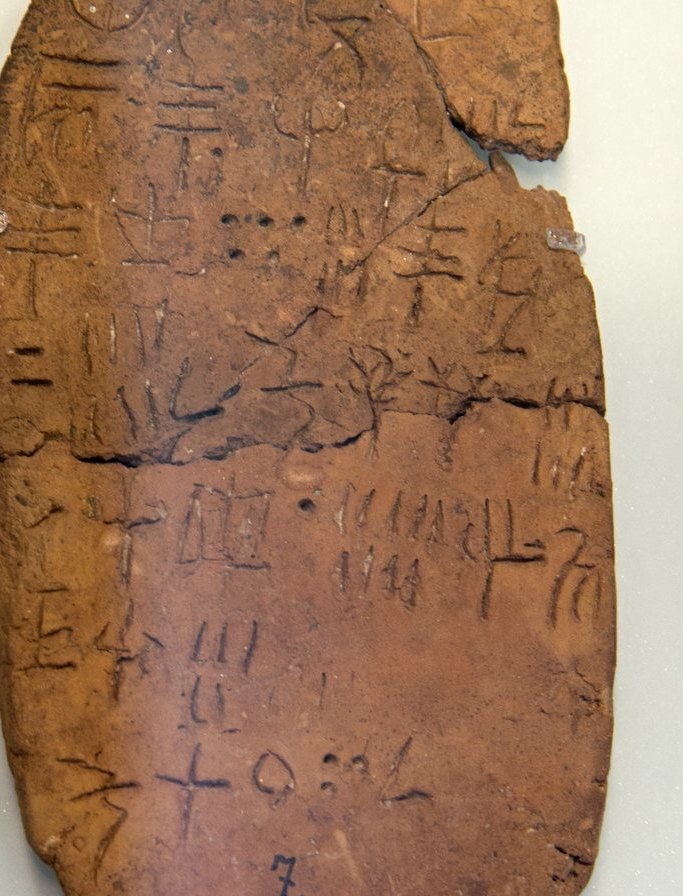
Words
We can see these marks. We still cannot read them. Not knowing yet is an honest answer.
We can see these marks. We still cannot read them.
We still can't read this
What is missing?
What would you need, to read this?
Can anyone read this today?
Open a drawer. Three are empty. One is not.
Not yet.
Keep looking
This tablet comes from Hagia Triada on Crete. The writing is Linear A, used by Minoan communities before Linear B. We can describe the object. We cannot yet read the language.
Linear A is not Egyptian hieroglyphic. It is not Linear B, even when some signs look related. A script is not automatically a language we know.
This is a careful guess. Shared signs with Linear B are a clue about sound, not a finished translation.
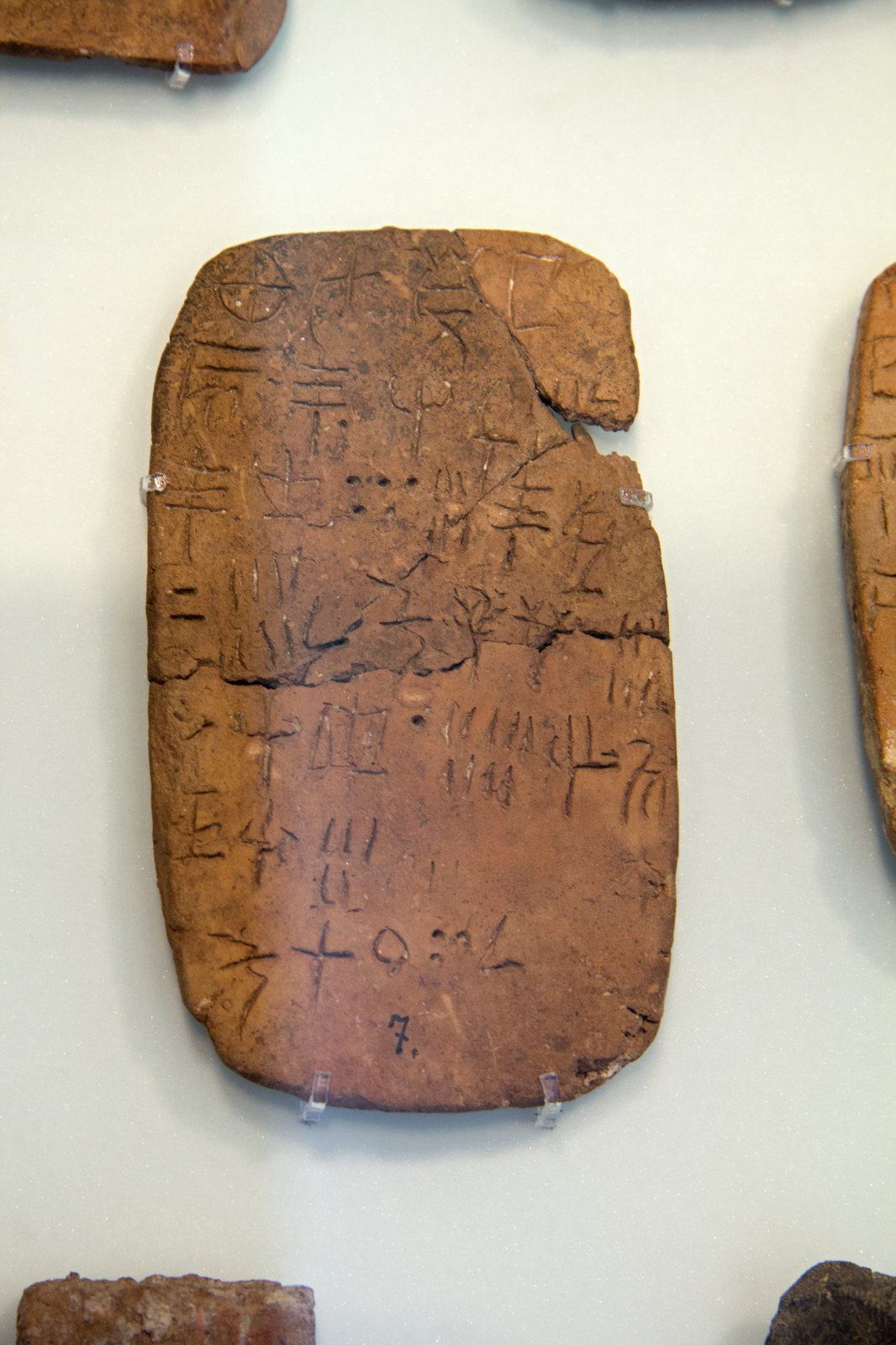

Not knowing yet is an honest answer.
A practice code you make is not Linear A.
When you leave
Write a tiny message in a code you invent. Do not explain it. Ask: what would a stranger need in order to read it?
Try with a grown-up. Look at the same thing. Look at the same unread mark together. What would you need in order to read it?
If someone found your writing 1,000 years from now, how would they know what it meant?