Words
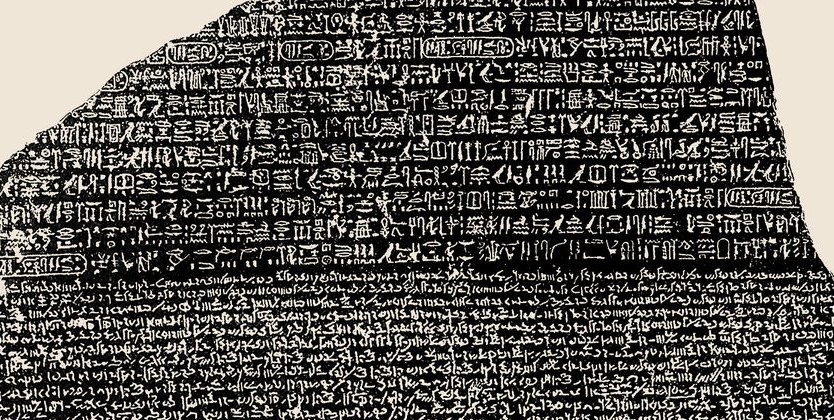
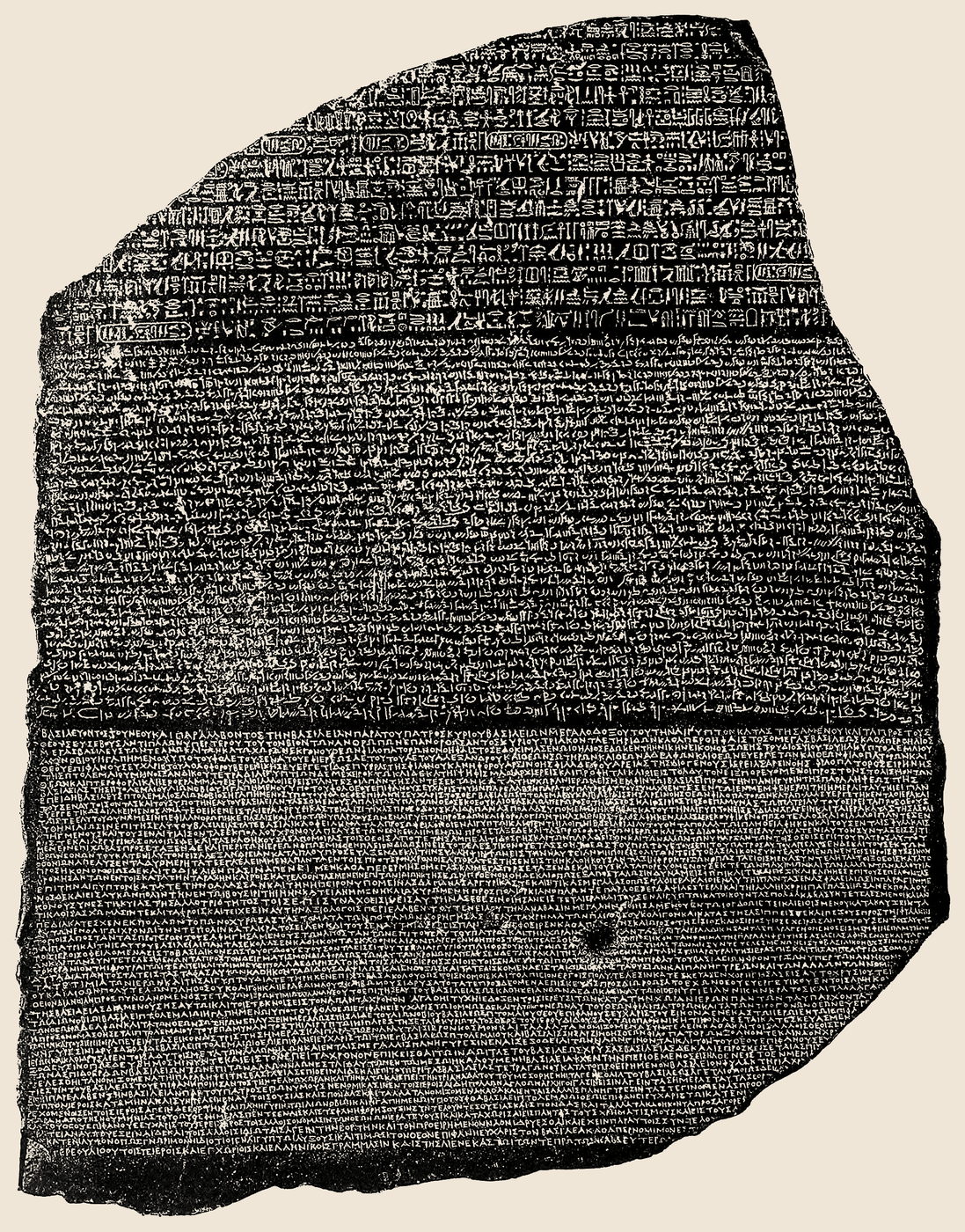
Look at the stone. Three bands of marks. Someone cut them by hand. Can you read this?
One stone. Three bands of marks. Someone cut them by hand.
The stone with three scripts
Can you read this?
Same words, or three different messages?
What do you think?
Three writings. One decree.
A picture is not always a picture
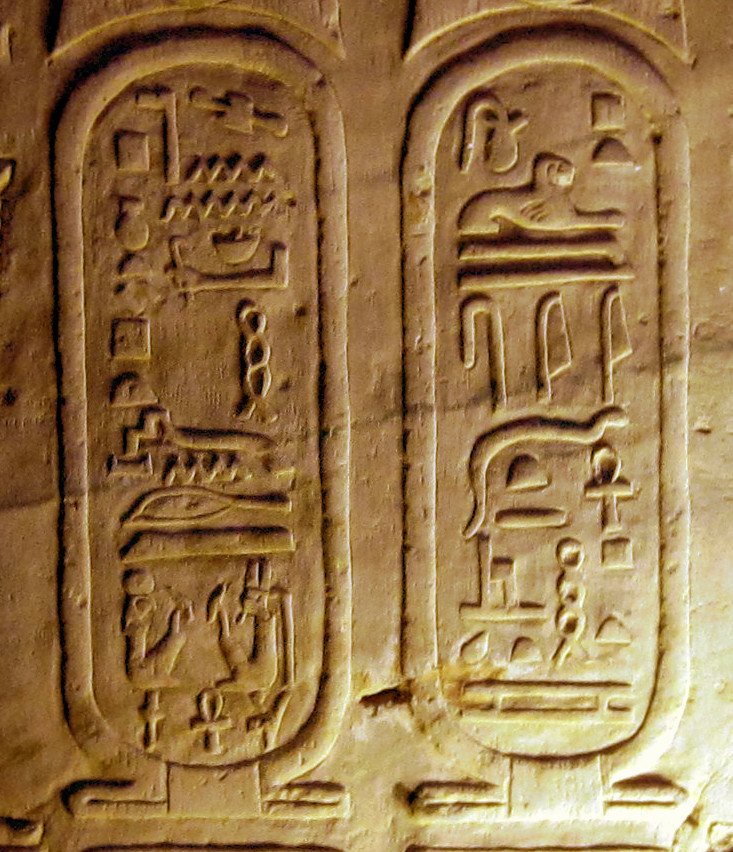
Look at this name. One sign looks like a bird. What is that sign doing here?
Keep looking
In 1822, Jean-François Champollion already knew Coptic. Coptic is a later way of speaking Egyptian that people still used in church. He used that living language, and names in ovals, to test whether the pictures could stand for Egyptian sounds.
Thomas Young had already shown that some signs in the oval of Ptolemy stood for sounds in a foreign name. Champollion did not look once and finish the work.
This is written down. French soldiers found the stone in 1799 near Rashid. The slab is a broken piece of a larger stele.
A mark is real.
What we think it means is a claim.
How could we check?

When you leave
Look at writing on a coin, a street sign, or a book. Someone made those marks so a later person could read them.
Try with a grown-up. Look at the same thing. Stand together in front of a museum stone, or a photograph of one. One of you looks first. Then the other reads the label.
If someone found your writing 1,000 years from now, how would they know what it meant?